
I Was Doing So Well. Then I Wasn't. Then I Thought I Was Just Not That Kind of Person.

I want to tell you about a phase of behavior change that nobody puts in the brochure.
Every model. Every framework. Every serious piece of research on how humans actually change their behavior accounts for it. And almost no health program, coach, or app tells you it's coming — or that it's supposed to.
It's relapse.
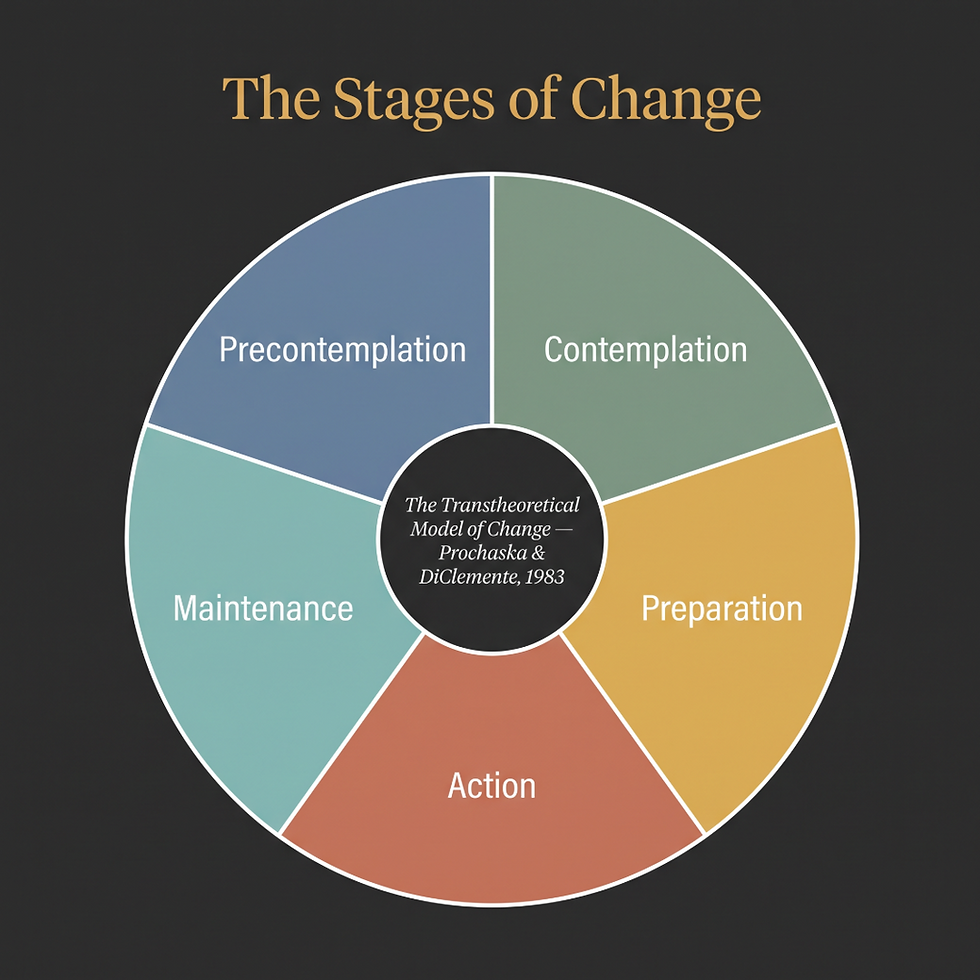
Not failure. Not weakness. Not proof that you're not the kind of person who can do this. Relapse is a formally recognized phase of the behavior change process — built into the Transtheoretical Model of Change, one of the most researched behavioral health frameworks in existence. It happens to almost everyone. And how you understand it when it arrives determines everything about what happens next.
Here's what most programs do when you fall off.
Nothing. Or worse — they make you start the streak over. They reset your progress bar. They send you a notification that says "it looks like you've been inactive." And without meaning to, they send you a very clear message: you failed. Try again.
Here's what the research actually says: relapse isn't the end of the cycle. It's part of the cycle. When you fall back into old patterns — when the stress hits and the habits you were building quietly disappear — you haven't returned to zero. You've moved into a phase. One that has a name, a research base, and a set of tools specifically designed to help you move through it faster.
I've relapsed more times than I can count. I've built habits that fell apart under the weight of financial crisis, physical injury, emotional exhaustion. I've watched months of progress dissolve in a few hard weeks. And every single time, the hardest part wasn't the falling — it was the shame that followed. The belief that this proved something about my character.
It didn't. And yours doesn't either.
At born Radiant, we actually talk about relapse before it happens. Not as a warning, but as preparation. Because knowing it's coming — knowing it's normal, knowing you have tools for it — changes your relationship to it completely. Instead of a reason to quit, it becomes a signal. Information. A moment to check in, adjust, and move forward again.
I call it the bonus phase. Because everyone gets it. And the people who understand it are the ones who keep going.

Comments